On 17 July 2026, the thematic session on "Digital Technologies Driving Global Sustainable Development" was held during the International Decade of Sciences for Sustainable Development (IDSSD) Global Conference in Paris, France. The session was jointly organized by the International Research Center of Big Data for Sustainable Development Goals (CBAS), the United Nations Educational, Scientific and Cultural Organization (UNESCO), the Food and Agriculture Organization of the United Nations (FAO), the Digital Sustainable Development Goals Programme (DSP), and the International Centre on Space Technologies for Natural and Cultural Heritage (HIST) under the auspices of UNESCO.
The opening ceremony featured remarks by Abou Amani, Assistant Director General for Sciences a.i., UNESCO; Luo Hui, Executive Secretary of the China Association for Science and Technology; Yang Xinyu, Ambassador and Permanent Delegate of China to UNESCO; Seng Chuan Tan, President of the World Federation of Engineering Organizations (WFEO); and Simon Hodson, Executive Director of the CODATA of the International Science Council (ISC). The opening ceremony was chaired by Prof. Guo Huadong, Director General of CBAS and Leading Scientist of the DSP.
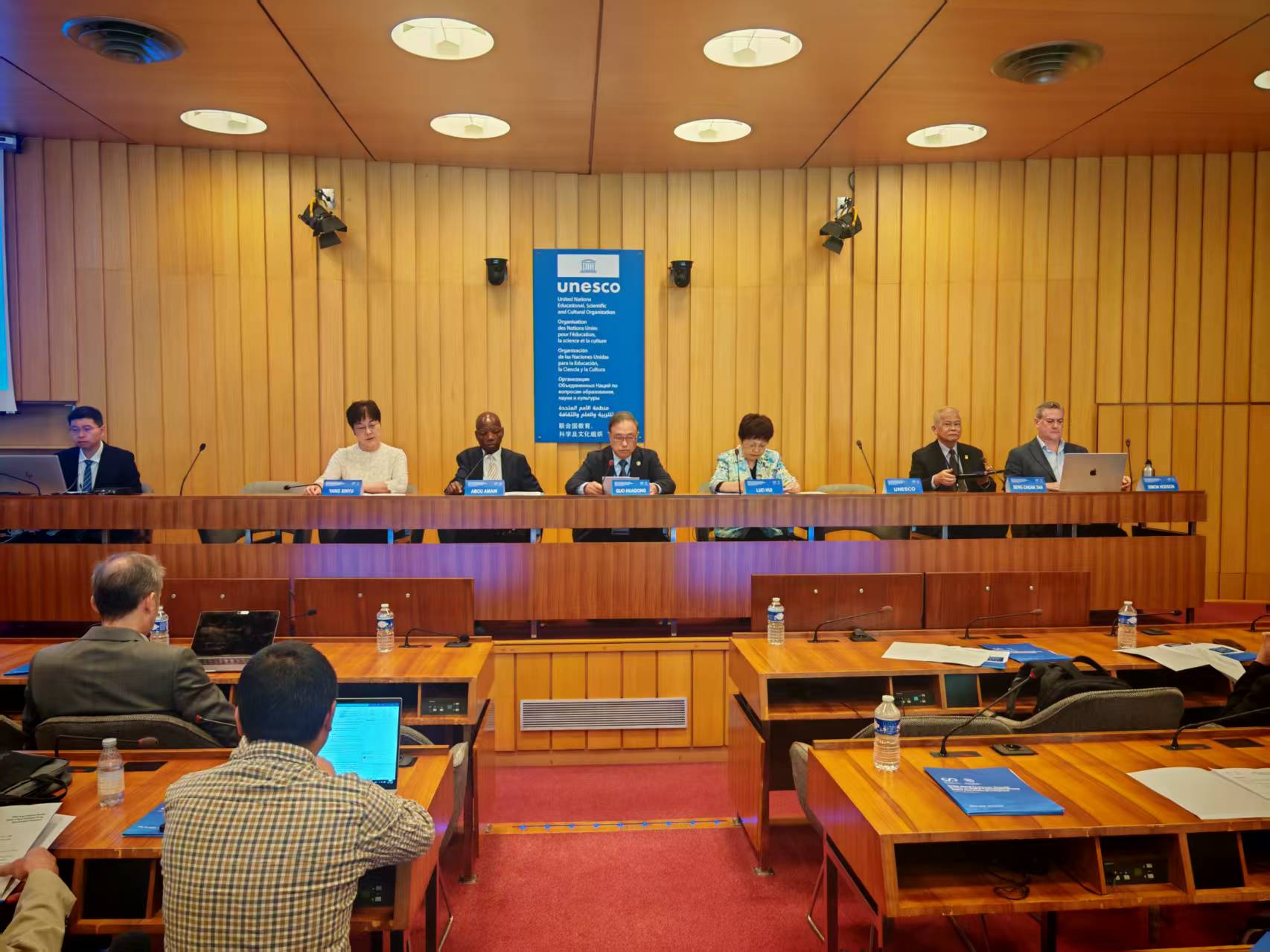
Prof. Guo Huadong delivering opening remarks
DSP Reaches a Milestone under the IDSSD Framework
During the session, Prof. Guo Huadong signed a cooperation agreement with Abou Amani on behalf of CBAS and UNESCO respectively.
Under the agreement, the two organizations will develop a long-term strategic partnership over the next eight years. Within the framework of the IDSSD, they will jointly carry out international scientific research, technical support, data sharing, capacity building, science communication, and the development of global collaboration networks to advance the global implementation of the DSP, address global sustainability challenges, and contribute to the implementation of both the IDSSD and 2023-2029 UNESCO Operational Strategy for Small Island Developing States.
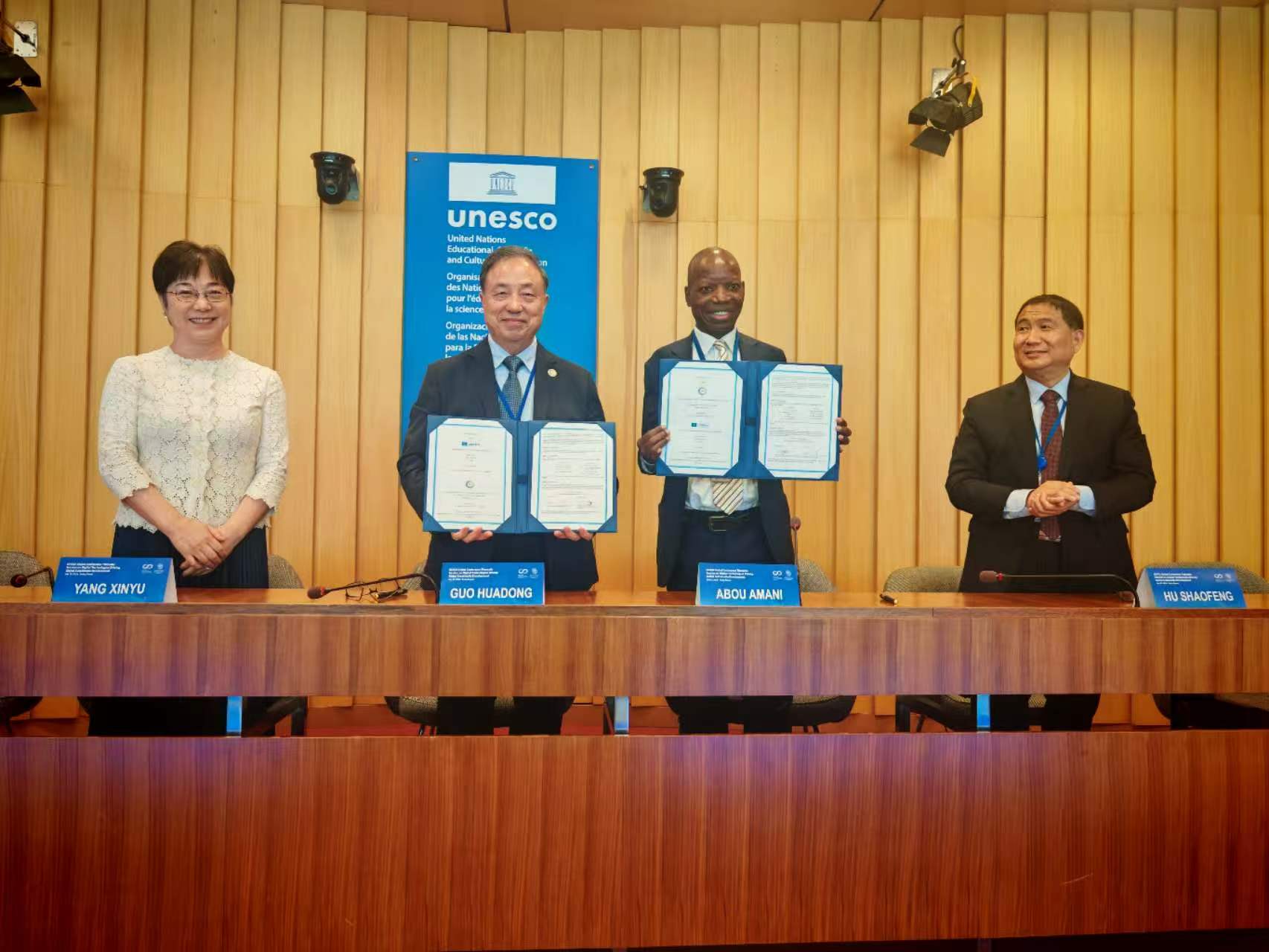
CBAS and UNESCO sign Cooperation Agreement
Looking Beyond 2030: Bringing Together Global Scientific Expertise for the DSP
The thematic session featured keynote speeches and roundtable discussions, attracting experts from leading research institutions around the world to exchange ideas and provide recommendations for the implementation of the DSP.
In his keynote address, Prof. Guo Huadong provided a comprehensive overview of the vision, objectives, and significance of the DSP, as well as the progress achieved since its launch in 2024. He noted that the DSP is guided by the vision of leveraging digital technologies to advance sustainable development by integrating Earth observation, big data, artificial intelligence, and other frontier technologies to transform data into knowledge and knowledge into action. He invited participants to take advantage of the conference platform to engage in in-depth discussions and contribute scientific insights for shaping the global sustainable development agenda beyond 2030.
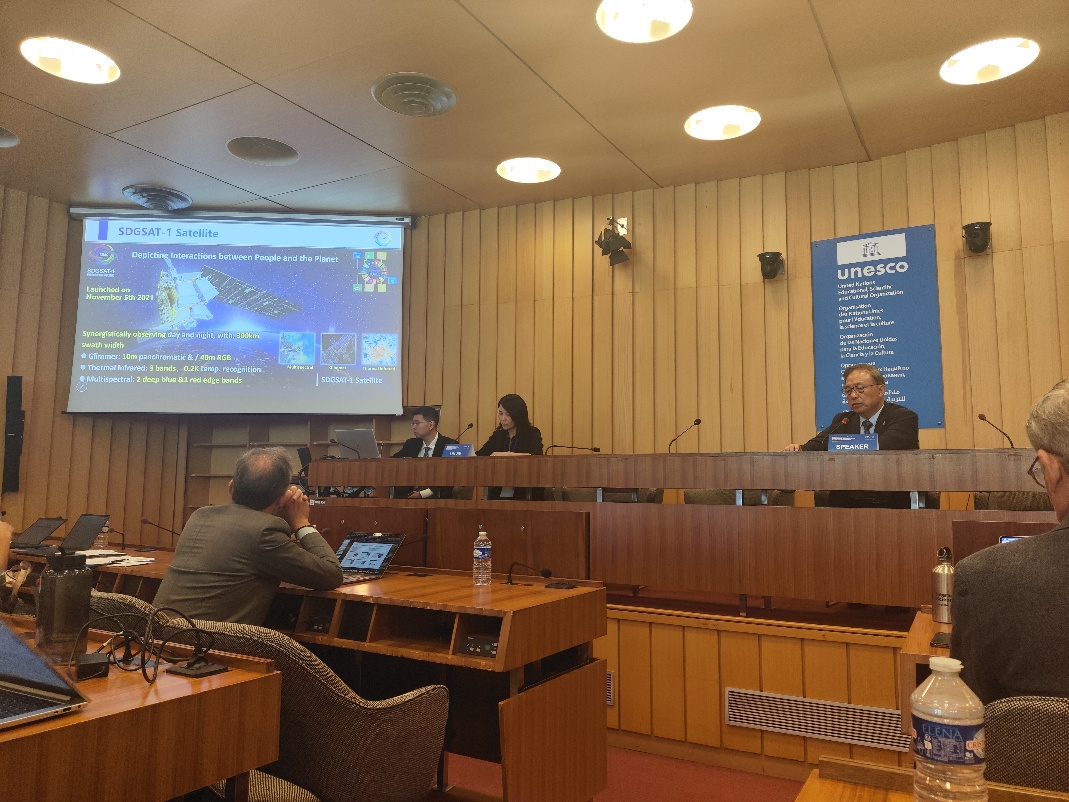
Keynote address by Prof. Guo Huadong
Following his presentation, Hu Shaofeng, Director of the Division of Ethics, Research and Technology of UNESCO, introduced the overall vision and implementation mechanism of the IDSSD. He emphasized the importance of strengthening interdisciplinary collaboration, enhancing the science–policy–society interface, and advancing the ethical governance of emerging technologies to ensure that scientific knowledge is translated more effectively into sustainable development action.
Martino Pesaresi, Senior Scientist at the European Commission's Joint Research Centre (JRC), presented the Centre's work on the Global Human Settlement Layer, spatial population mapping, and disaster risk assessment. He demonstrated how open geospatial data, Earth observation, and big data analytics can address the spatial and temporal limitations of conventional statistics, providing robust evidence for globally comparable monitoring and evidence-based decision-making.
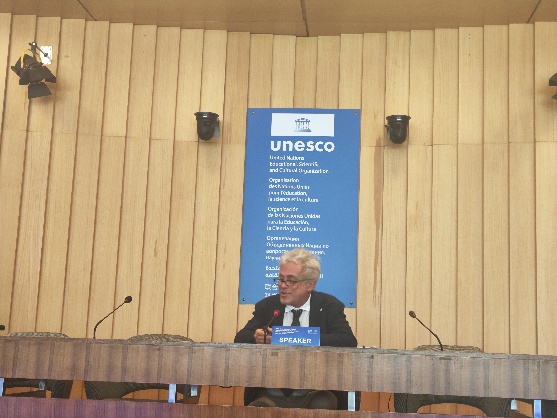
Keynote addresses by Hu Shaofeng and Martino Pesaresi
During the thematic presentation session, six experts—including Livia Peiser, Head of the Geospatial Unit of FAO's Land and Water Division, Prof. Wang Fan, Director of the Institute of Oceanology, Chinese Academy of Sciences, Johannes Cullmann of the German Federal Institute of Hydrology and Science Advisor to the President of the 77th United Nations General Assembly, Emmanuel Pajot, Secretary General of the European Association of Remote Sensing Companies (EARSC), and Prof. Ranjula Swain of the Stockholm School of Economics—shared perspectives from Earth science, geospatial information, environmental science, and economics on the challenges and emerging opportunities for SDG indicator monitoring. Their presentations contributed multidisciplinary perspectives to further enrich the research and application scenarios of the DSP.
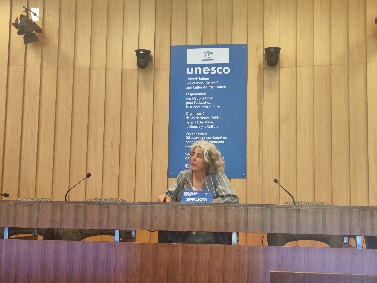
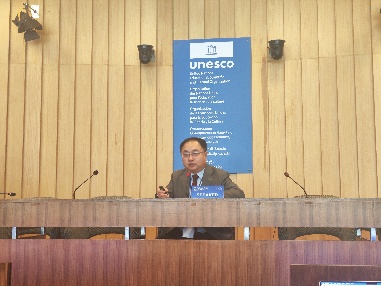
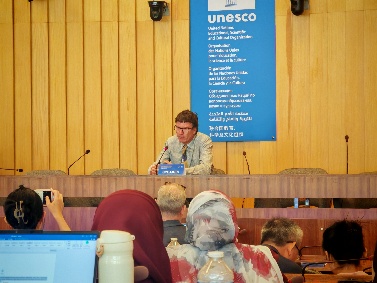
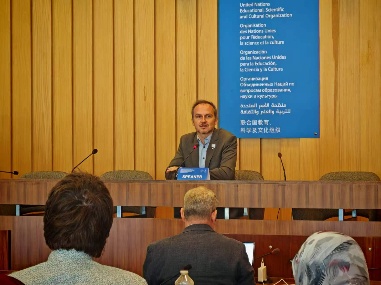
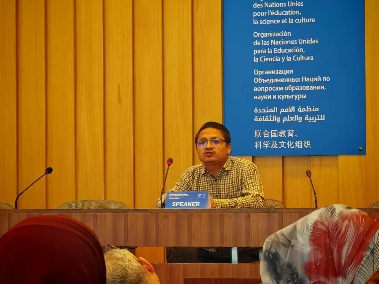
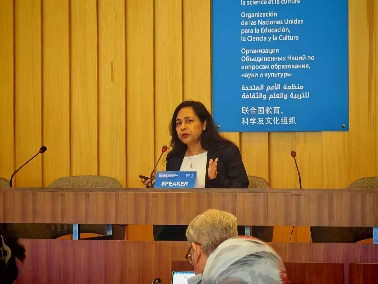
Thematic presentations
From Digital Evidence to Collective Action: Expanding the Global DSP Partnership Network
The roundtable discussion was moderated by Gretchen Kalonji, former UNESCO Assistant Director-General for Natural Sciences and Special Advisor to CBAS. Participants exchanged views on the theme "From Digital Evidence to Collective Action: Building a Global Science Partnership for the SDGs and Beyond".
The experts agreed that it is essential to establish trustworthy, transparent, and traceable digital evidence systems while balancing global comparability with regional adaptability, as well as open data sharing with data sovereignty. They also emphasized the importance of jointly developing digital indicators, data standards, and demonstration applications through collaboration among United Nations agencies, Member States, scientific organizations, and local institutions. Particular attention should be given to strengthening capacity building in Africa and Small Island Developing States (SIDS), enabling them to become co-producers of scientific knowledge and technology. Participants further stressed the need to establish mechanisms for continuous monitoring, implementation feedback, and accountability so that scientific evidence can be effectively embedded in policymaking and implementation.
The experts also called for international cooperation to evolve from fragmented projects toward sustainable open collaboration platforms, and welcomed more international organizations, research institutions, and partners to join the DSP partnership network to jointly develop more inclusive global public goods through digital technologies.
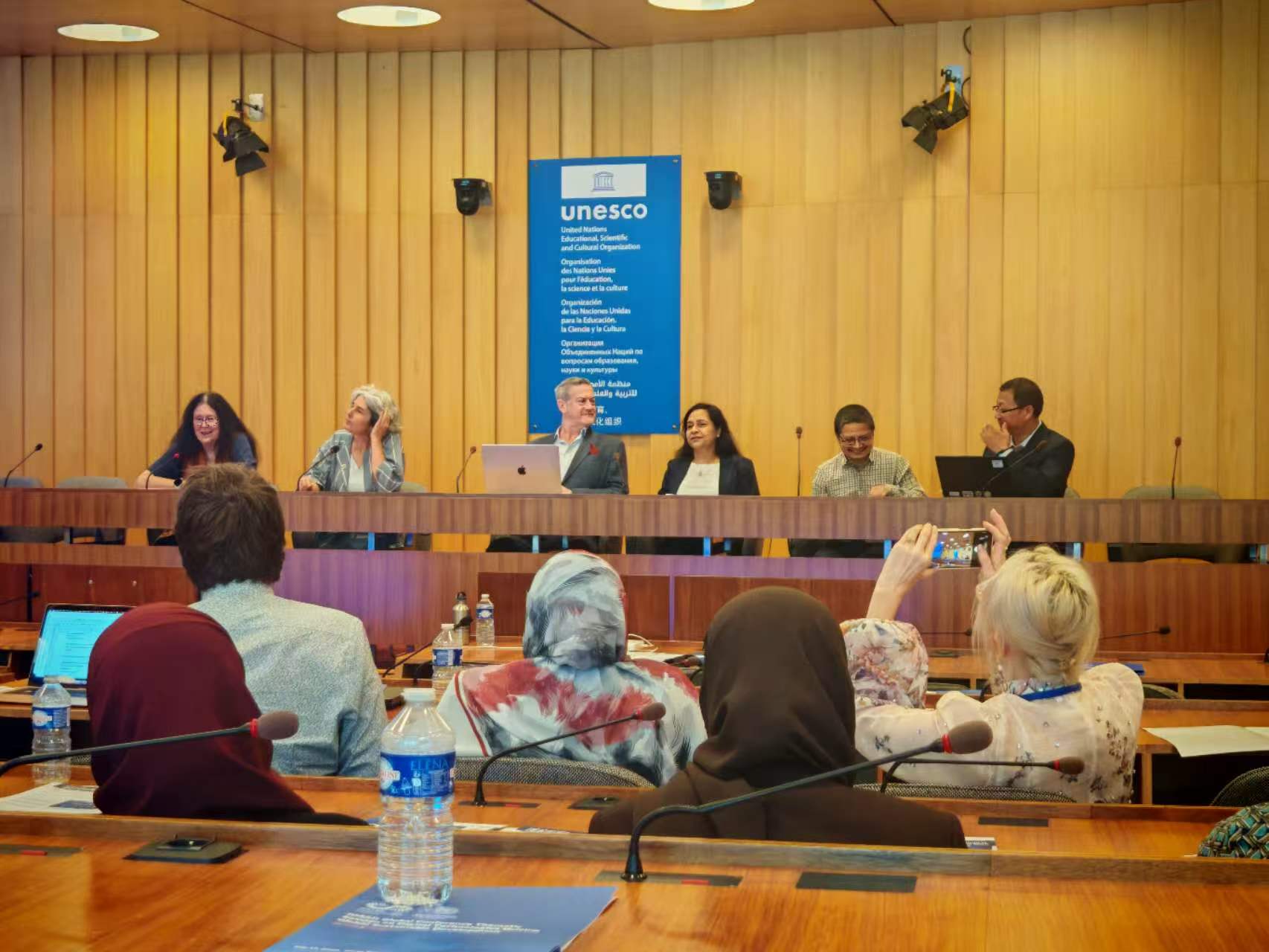
Roundtable discussion
As one of the thematic sessions of the IDSSD Global Conference, the event attracted more than one hundred participants from countries around the world. The DSP, being the central focus of the session, was jointly initiated by CBAS together with more than one hundred scientists from 35 countries and regions, as well as 59 international organizations and research institutions. In February 2025, the DSP was officially endorsed by UNESCO as an international science programme under the IDSSD.
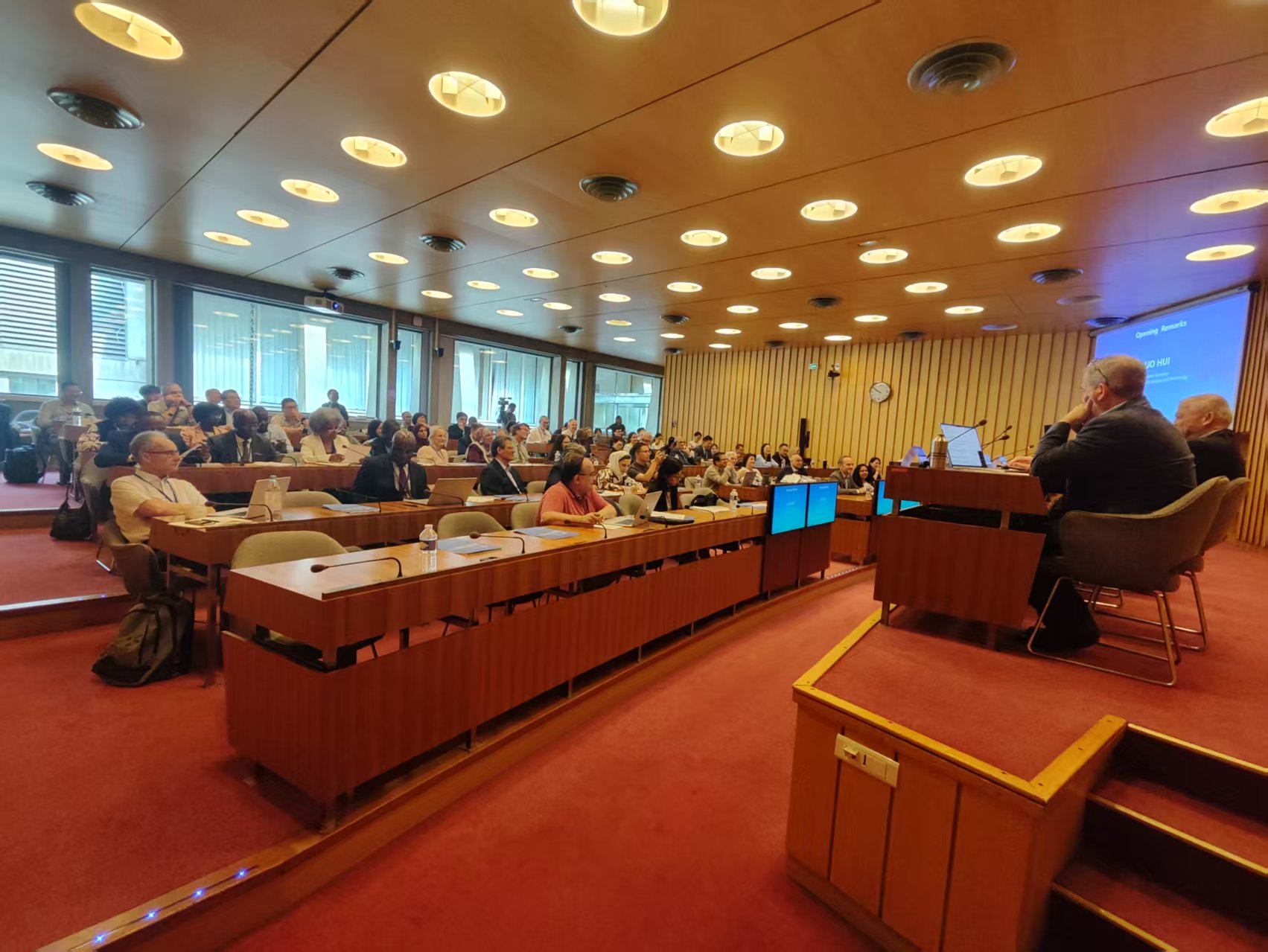
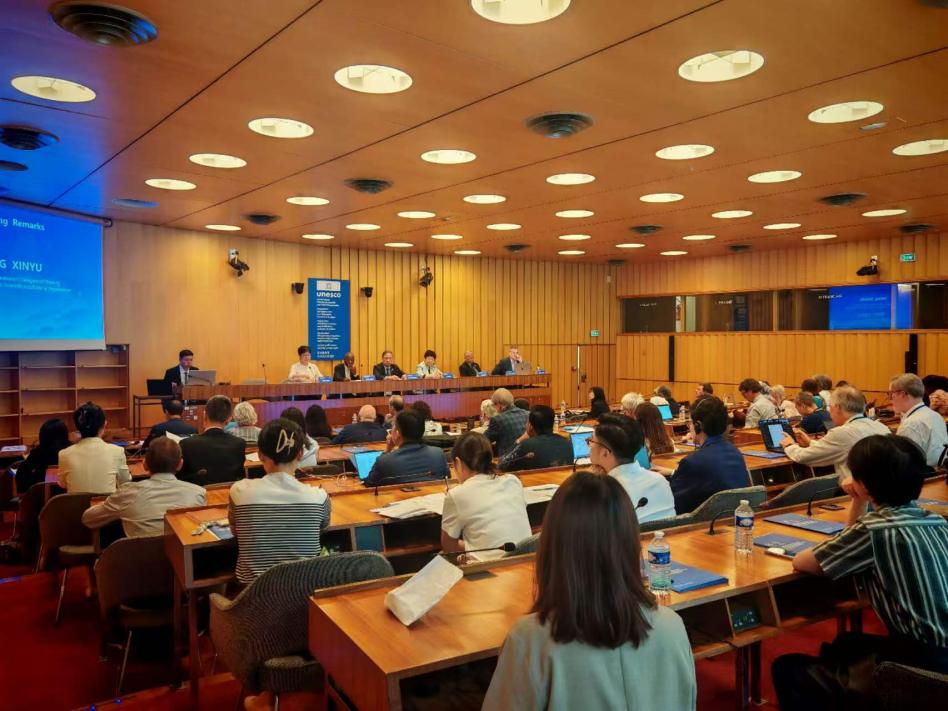
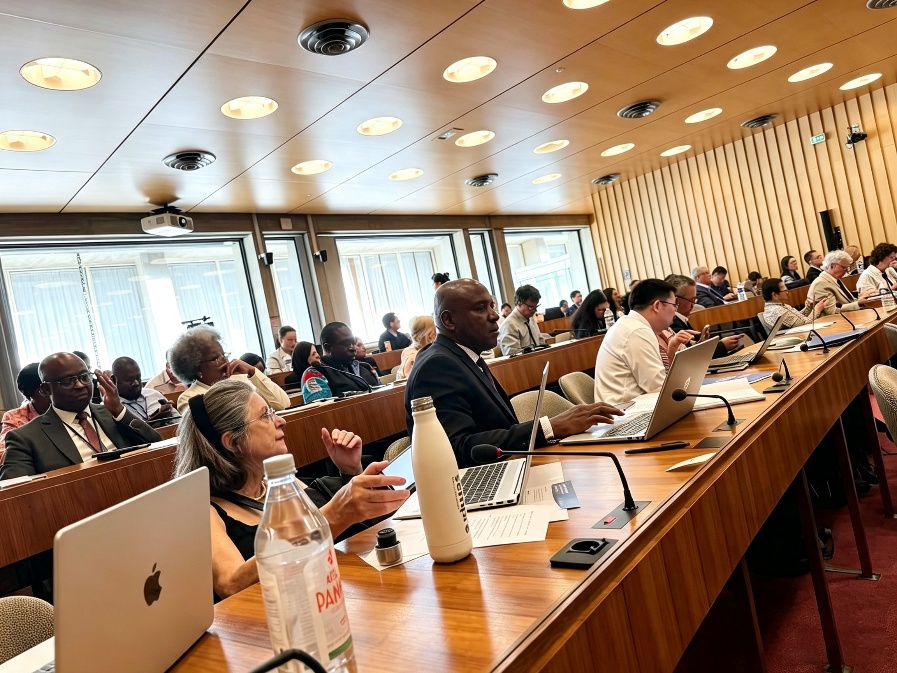
Session in progress
During the IDSSD Global Conference, Prof. Guo Huadong, being the leading scientist of DSP, was also invited to participate in the plenary session on 16 July marking the release of the IDSSD Global Report, where he joined a high-level panel discussion. Building on the report's central message of "moving from scientific mobilization to knowledge transformation and real-world impact," he explained how the DSP integrates monitoring, diagnosis, scenario analysis, and decision support through open digital evidence, mission-oriented research, and sustained international cooperation. He also called for the Global Report to evolve from a periodic assessment into a platform for continuous action and international collaboration.
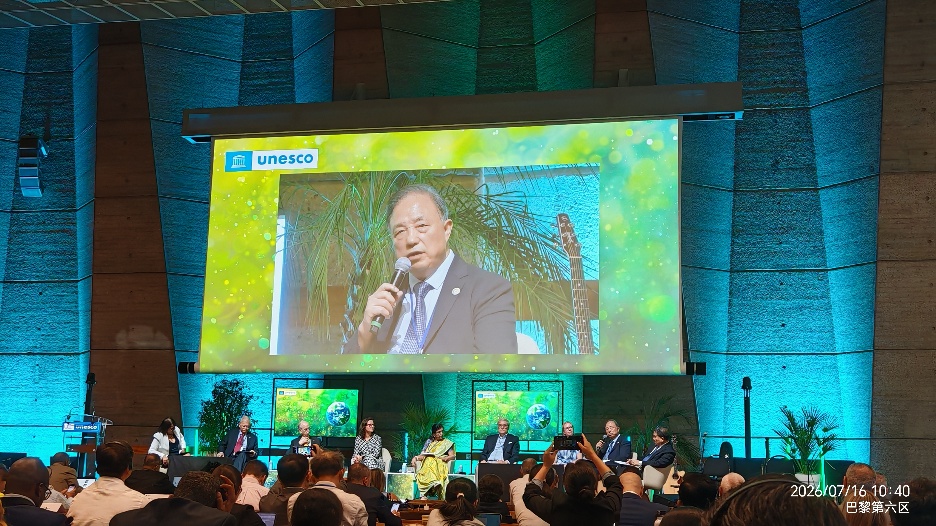
Guo Huadong speaks at the IDSSD Plenary Session
During the conference, CBAS also organized a Special Exhibition on the DSP at UNESCO Headquarters in Paris. The exhibition attracted extensive attention from government representatives, international organizations, experts, scholars, and other stakeholders attending the conference.
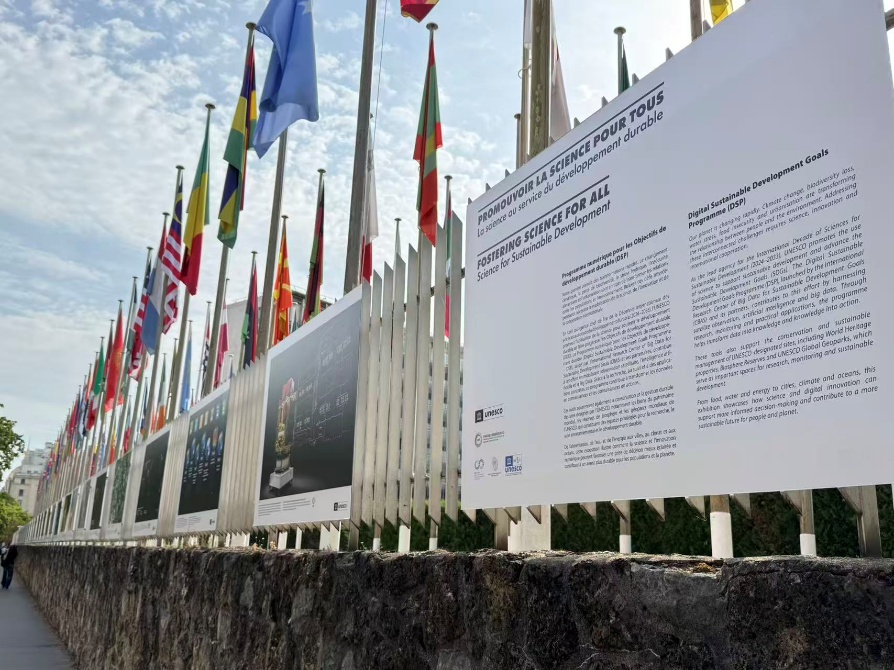
Exhibition site