On 16 July 2026, the International Research Center of Big Data for Sustainable Development Goals (CBAS) successfully launched a two-month thematic exhibition on digital technologies for sustainable development at UNESCO Headquarters in Paris, France. Centered on the Digital Sustainable Development Goals Programme (DSP), the exhibition showcased the Programme’s innovative applications and achievements in supporting the United Nations 2030 Agenda for Sustainable Development through earth observation, artificial intelligence (AI), and big data.
The exhibition featured applications of the SDGSAT-1, as well as Big Earth Data-enabled monitoring and assessment of the Sustainable Development Goals (SDGs), covering SDG 2 (Zero Hunger), SDG 6 (Clean Water and Sanitation), SDG 7 (Affordable and Clean Energy), SDG 11 (Sustainable Cities and Communities), SDG 13 (Climate Action), SDG 14 (Life Below Water), and SDG 15 (Life on Land). It also highlighted digital solutions for the conservation of natural and cultural heritage. The exhibition attracted global attention from government representatives, international organizations, experts, scholars, and other stakeholders attending the International Decade of Sciences for Sustainable Development (IDSSD) Global Conference hosted by UNESCO.
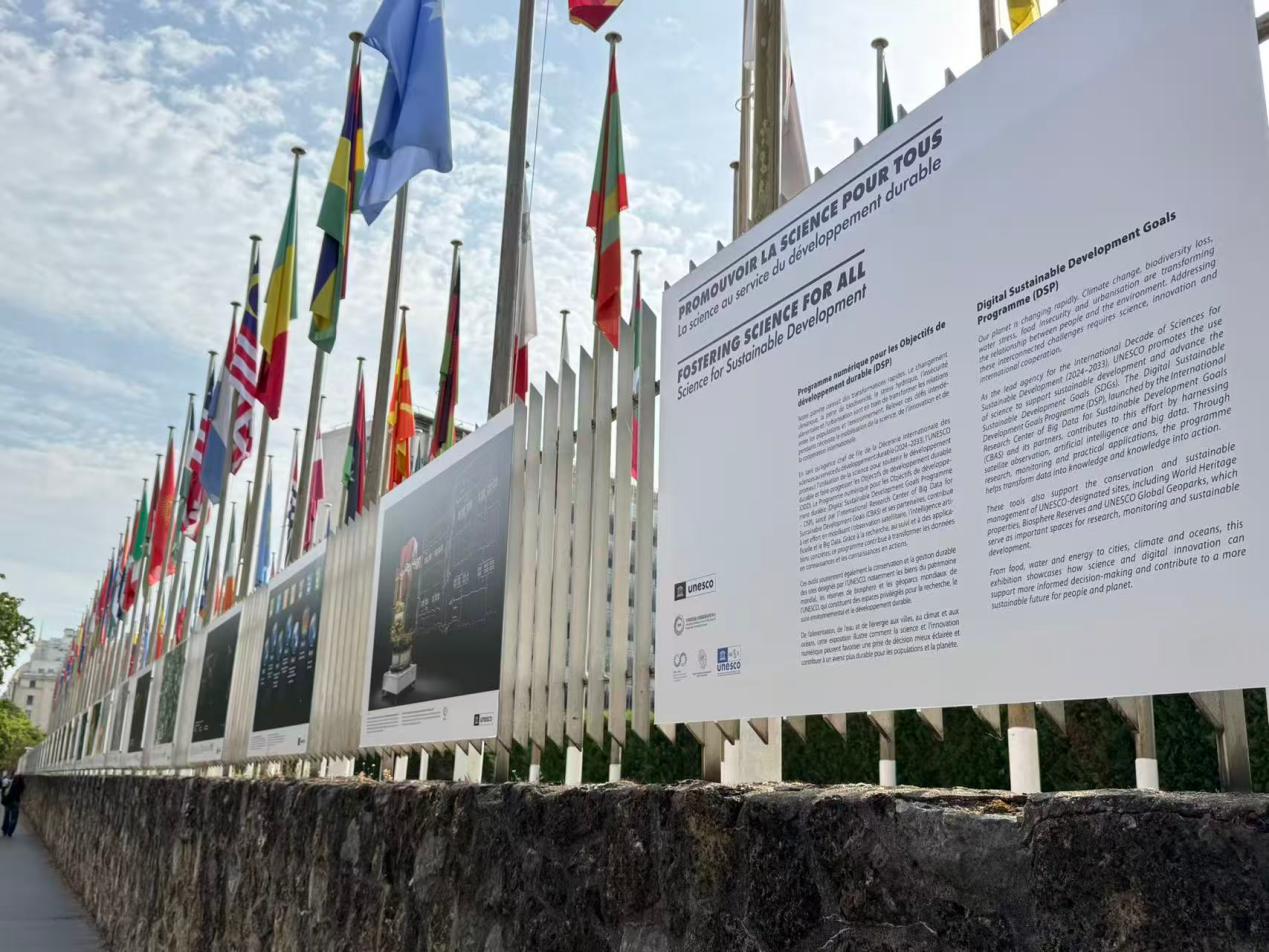
At the exhibition
Special Exhibition on the Digital Sustainable Development Goals Programme (DSP)
Our planet is changing rapidly. Climate change, biodiversity loss, water stress, food insecurity, and urbanisation are transforming the relationship between people and the environment. Addressing these interconnected challenges requires science, innovation, and international cooperation.
As the lead agency for the IDSSD, UNESCO promotes the use of science to support sustainable development and advance the Sustainable Development Goals (SDGs). The DSP launched by CBAS and its partners, contributes to this effort by harnessing satellite observation, artificial intelligence, and big data. Through research, monitoring, and practical applications, the programme helps transform data into knowledge and knowledge into action.
These tools also support the conservation and sustainable management of UNESCO-designated sites, including World Heritage properties, Biosphere Reserves, and UNESCO Global Geoparks, which serve as important spaces for research, monitoring, and sustainable development.
From food, water, and energy to cities, climate, and oceans, this exhibition showcases how science and digital innovation can support more informed decision-making and contribute to a more sustainable future for people and planet.